
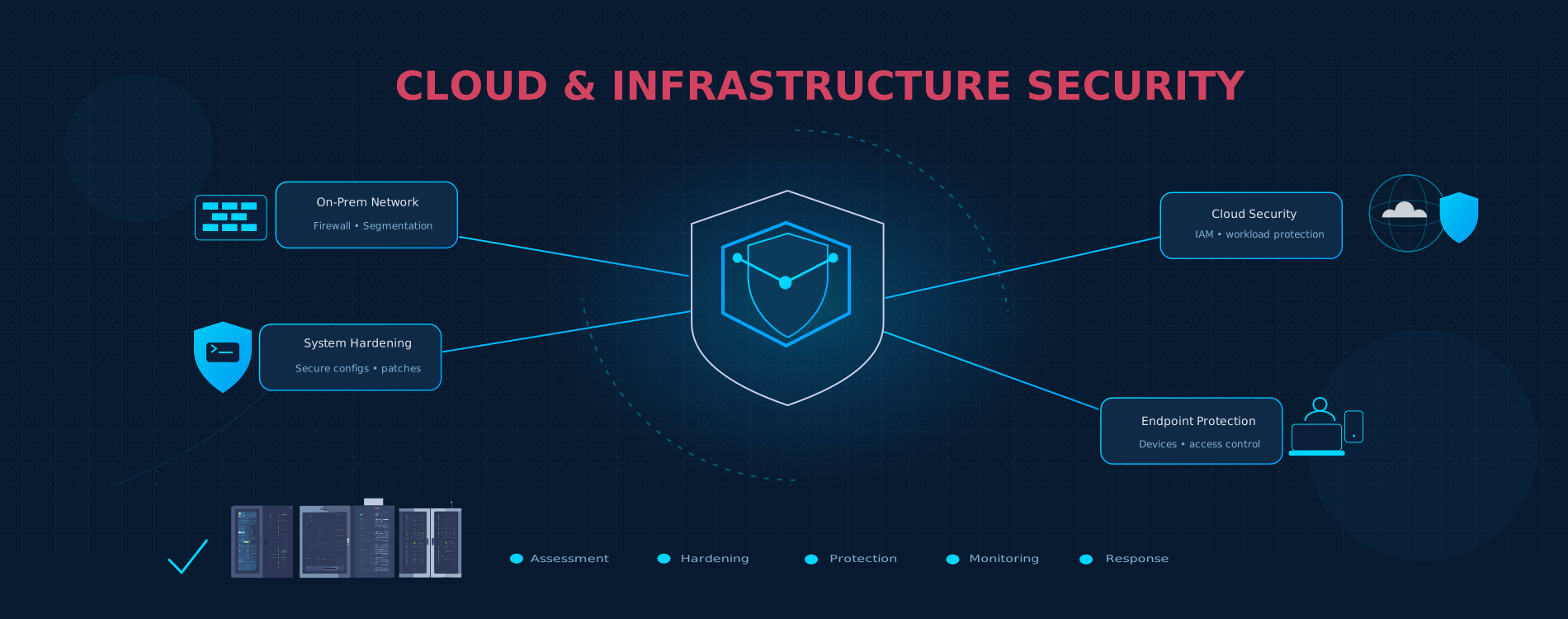
Cloud & Infrastructure Security
Strengthening the security of networks, servers, cloud systems, and endpoints through hardened architecture, controlled access, and continuous visibility.
Network Security & Segmentation
Protect internal and external traffic flows.
We design secure network architectures that control how systems communicate internally and externally. This includes firewall policy review, network segmentation using VLANs or VPCs, Zero Trust principles, intrusion detection readiness, secure VPN access, and protection against exposure to malicious traffic or denial-of-service activity.
System Hardening
Reduce attack surface of servers and operating systems.
We strengthen operating systems by applying secure baseline configurations, minimizing unnecessary services, securing remote access channels such as SSH or RDP, and ensuring systems follow recognized hardening practices. This significantly reduces the opportunities attackers have to exploit weaknesses.
Cloud Security
Secure cloud workloads, storage, and configurations.
We review cloud environments to ensure workloads, storage resources, and network configurations are securely structured. This includes proper isolation of resources, secure access policies, encryption usage, logging readiness, and reduction of risks caused by misconfigured cloud services.
Identity & Access Management (IAM)
Control who can access systems and resources.
We help ensure that access to infrastructure is granted only when necessary and according to clearly defined roles. By applying least privilege principles and improving administrative access controls, organizations reduce the risk of unauthorized changes, data exposure, or privilege misuse.
Endpoint & Workload Protection
Protect servers, devices, and hosted workloads.
We support the protection of servers, workstations, and hosted workloads through modern defensive practices. This includes improving system visibility, reducing malware exposure risks, strengthening workload protection, and ensuring devices interacting with infrastructure meet security expectations.
Security Monitoring & Detection
Gain visibility into infrastructure activity.
We help organizations establish better visibility over infrastructure behavior through logging, activity monitoring, and detection readiness. Increased visibility allows faster identification of suspicious activity and supports more informed response to potential security incidents.
Data Protection
Protect sensitive data across infrastructure.
We encourage the use of encryption and secure handling practices to protect sensitive information both during transmission and while stored. Strong data protection practices reduce the likelihood of unauthorized access, leakage, or exposure of confidential information.
Backup & Recovery
Ensure service resilience and recovery capability.
We help organizations maintain reliable backup and recovery strategies that support operational continuity. Proper backup practices improve resilience against accidental data loss, system failure, or ransomware incidents, ensuring critical services can be restored when needed.