
A useful security note helps a person understand something and decide what to do. The reader should not need to decode a technical performance or guess which sentence matters. Start with the fact or idea, explain the evidence, and connect it to a practical action.
Understand the idea
Separate what is known from what is still uncertain. Name the source of important claims and define necessary technical terms where they appear. Match the detail to the audience: a staff member deciding about an email needs a different explanation from an engineer changing a server.
- Fact
Lead with a specific, supported observation.
- Context
Name the source and the important uncertainty.
- Action
Assign a practical next step and a completion check.
A practical example
Imagine a note saying only that “sophisticated threats are increasing.” The revised version explains that an unexpected account change was observed, identifies the source, states what remains under review, and tells the service owner which check to complete. The second note gives the reader something usable.
What to do next
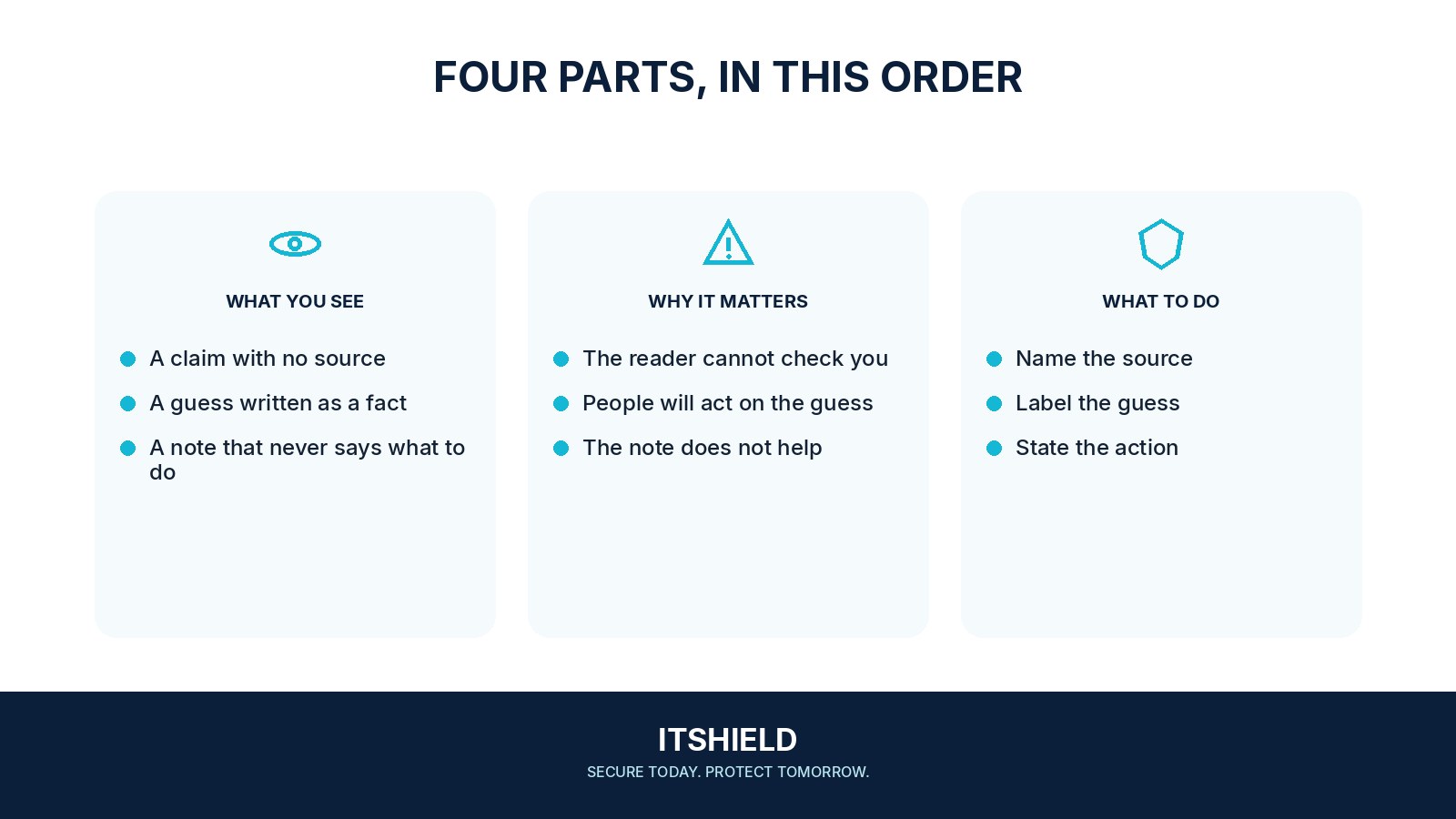
- State the fact or idea. Give the reader a clear first sentence about what happened or what the topic means.
- Name the source. Link an important claim to the relevant record, guidance, test, or responsible person.
- Explain uncertainty. Say what has not been established and why that gap matters to the decision.
- Finish with an action. State who should do what next and how they can tell whether it worked.
How to check the result
Ask someone in the intended audience to explain the message and next step back to you. If they cannot, revise the wording and sequence before adding more emphasis or detail.
The draft sounds confident, but nobody can explain the next action.
Rewrite the opening around the verified fact and the ending around the intended decision or task. Ask someone in the audience to explain back what they should do.
Sources and useful guides
The following resources provide background and more detailed guidance. Use the sections that match your service and situation.