
Showing 1–12 of 14 articles
Page 1 of 2
How to write a security note people can trust
A useful security note makes its claims checkable and its next step clear. State what is known, identify the source, label uncertainty, and tell the reader who needs to do what.
Read the visual guide
What a security finding should contain
A useful finding gives its owner enough information to understand and verify the problem. Identify the affected asset, safe evidence, practical consequence, and a correction with a clear completion test.
Read the visual guide
What to put in an evidence pack for a lawyer
An evidence pack should let an authorized legal reviewer understand the sources, timeline, handling, and gaps. Ask counsel to direct legal scope and distribution while keeping the technical record clear.
Read the visual guide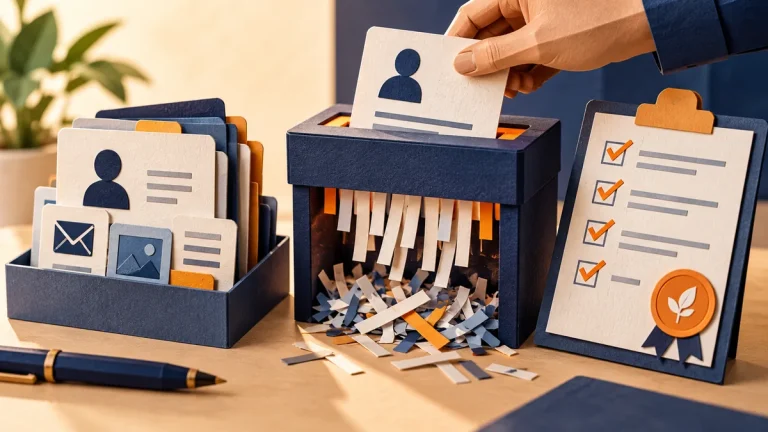
How to show that you deleted someone’s data
A completed deletion ticket is not proof that every copy was removed. Record the systems searched, actions taken, justified retention, and how backups or restoration affect the result.
Read the visual guide
How to talk about an incident before you know everything
People can make better decisions when an incident update identifies facts, gaps, current actions, and the next communication point. Avoid letting a confident tone outrun the evidence.
Read the visual guide
How long to keep security logs
Retention is an operational decision about which events must remain available, for how long, and at what cost and sensitivity. Connect the window to incident questions and real search capability.
Read the visual guide
Detection notes an auditor can follow
A defensible detection record connects the rule, its data, a test, an event, and the action taken. Keep that chain readable without requiring someone to reconstruct it from unrelated screenshots.
Read the visual guide
What to keep after a security incident
Useful evidence includes the original record, its source, the collection method, and the limits of what it shows. Keep investigation copies separate from originals and control access to both.
Read the visual guide
Why log times have to agree before you can trust the order
The order shown by two log systems may reflect clock settings, time zones, or ingestion delay rather than the true event sequence. Preserve those distinctions while building a timeline.
Read the visual guide
How to handle a security report from someone you do not know
A report from an unfamiliar person may identify a real issue. Provide a controlled route to receive it, assess the evidence, and decide the next step without encouraging unnecessary testing.
Read the visual guide
How to write a security note a board can use
A board needs to understand the decision, its consequence, and the uncertainty around it. Replace a long list of tools with a concise account of risk, options, ownership, and evidence.
Read the visual guide
What to do if someone is using your identity
Identity misuse can involve different services and different remedies. Record what you know, secure affected accounts, and contact the organizations handling the actual misuse.
Read the visual guide