
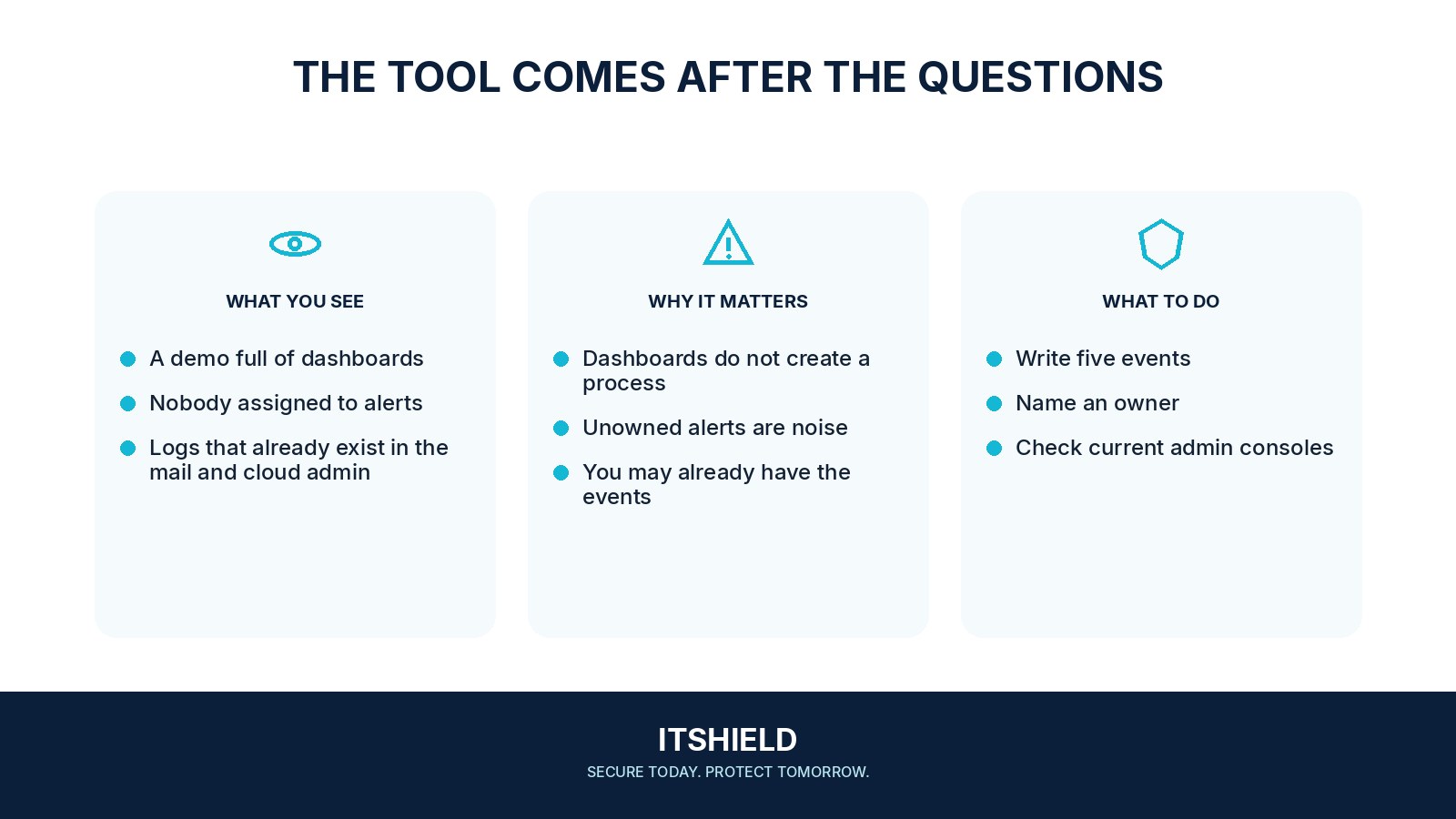
A monitoring tool can collect records and raise alerts, but it cannot decide what your team needs to protect. Buying one before defining that work can leave you with expensive data and nobody ready to act on it. Start with the questions the service must help answer.
Understand the idea
Choose important systems, the activity worth noticing, and the hours when someone can respond. Agree who investigates an alert and what authority they have. Check the data sources and ongoing work needed to maintain them. Compare products against this plan rather than against the length of a feature list.
- Scenario
Describe an event you need to notice.
- Evidence
Confirm the necessary data reaches the system.
- Response
Test who receives the alert and what happens next.
A practical example
Imagine a small organization receiving a trial tool with hundreds of alerts each day. The team has no agreed owner or response process. It narrows the trial to administrator changes and unusual account access, then tests whether a real responder can investigate those events.
What to do next
- Connect a small set of important sources and verify actual event fields and delivery delay.
- Generate harmless, approved test events for the chosen detection stories.
- Follow the alert into a case and have a real responder use the proposed workflow.
- Measure noise, missing context, time to investigate, and the cost of the observed data volume.
- Record gaps and acceptance criteria before deciding to expand.
How to check the result
Use a controlled event to follow the complete path from collection to investigation. A good evaluation records what the team learned and the action it could take, not only that the dashboard displayed an alert.
The connector shows healthy. Does that prove useful coverage?
Check actual event records and a representative test. A healthy connection does not establish that the required events, identities, and timestamps are present.
Sources and useful guides
The following resources provide background and more detailed guidance. Use the sections that match your service and situation.