
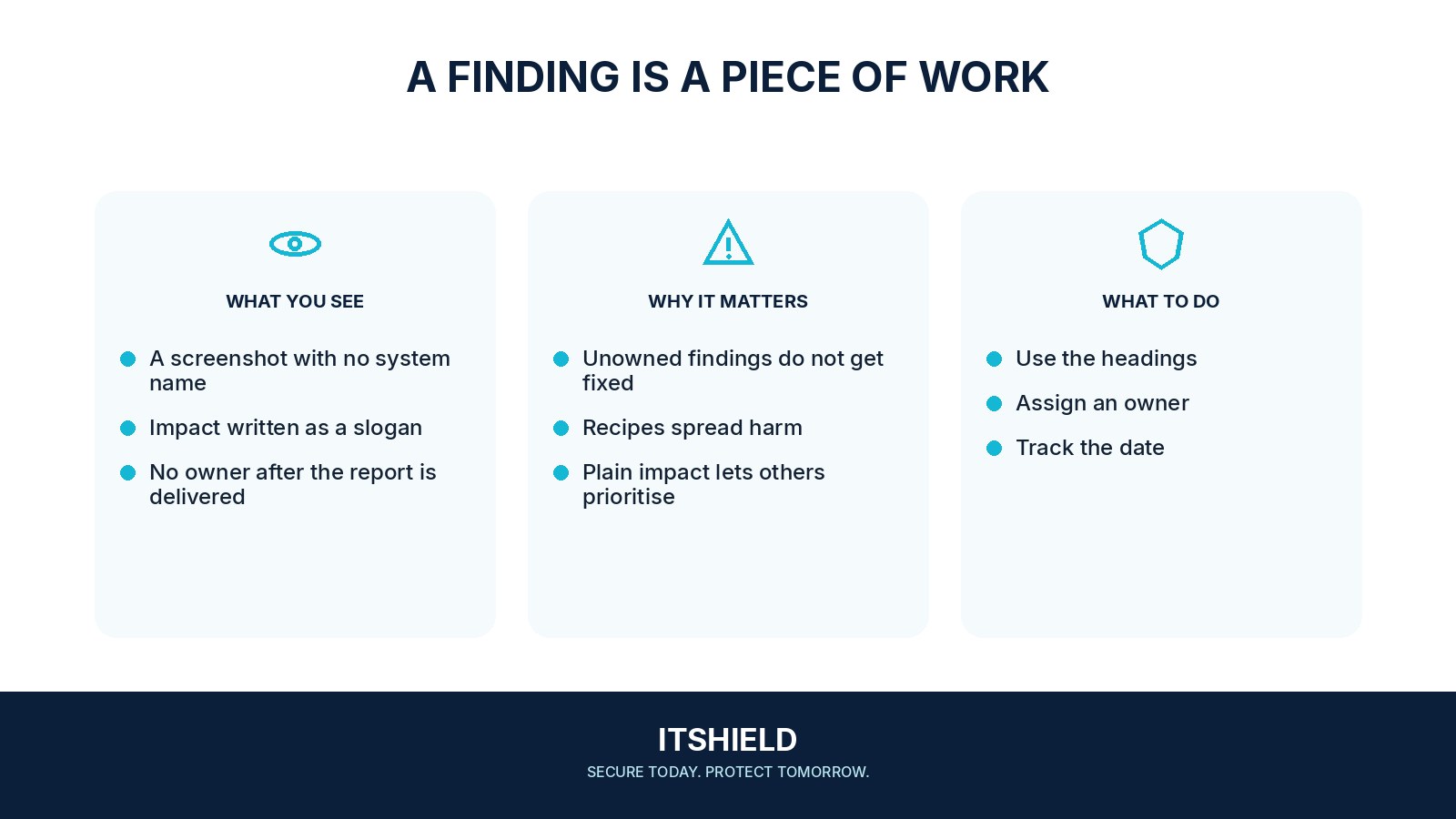
A security finding should let the responsible person understand the problem and verify a correction. It needs more than a dramatic title or a severity label. Explain the affected asset, what was observed, why it matters, and what a suitable next step looks like.
Understand the idea
Keep evidence safe and specific. Describe the tested conditions and separate the observed result from possible consequences. Name an owner and a completion test, while leaving detailed implementation choices to the appropriate team. A finding is easier to act on when it does not require a second meeting just to identify the affected service.
- Evidence
Record the condition and its affected scope.
- Consequence
Explain what could happen in this environment.
- Correction
Name an owner, a fix, and a verification method.
A practical example
Imagine a report saying “critical file exposure” without a location or evidence. The revised finding identifies the owned storage folder, the unintended audience, a safe test result, and the intended access boundary. The owner can now correct and retest the actual issue.
What to do next
- Identify the asset. Name the service, component, or information involved and the conditions under which the issue was observed.
- Show safe evidence. Give enough controlled evidence to support the finding without exposing unnecessary sensitive material.
- Explain the consequence. Separate what the test demonstrated from what might happen under other conditions.
- Define correction and verification. Name an owner, a proportionate next step, and a completion test that can be repeated by an authorized reviewer.
How to check the result
Ask another authorized person whether they can locate the asset and understand the completion test. Keep sensitive evidence restricted and link the final retest to the finding.
The recommended fix says “follow best practices.”
Replace it with the specific control or change required for this finding. Explain how the owner can confirm that the relevant condition is no longer present.
Sources and useful guides
The following resources provide background and more detailed guidance. Use the sections that match your service and situation.