
Cyber insurance is a contract about specified losses, services, conditions, and exclusions. A product name or headline coverage amount does not explain what help will be available during an incident. Before buying, connect the wording to the situations your organization needs to manage.
Understand the idea
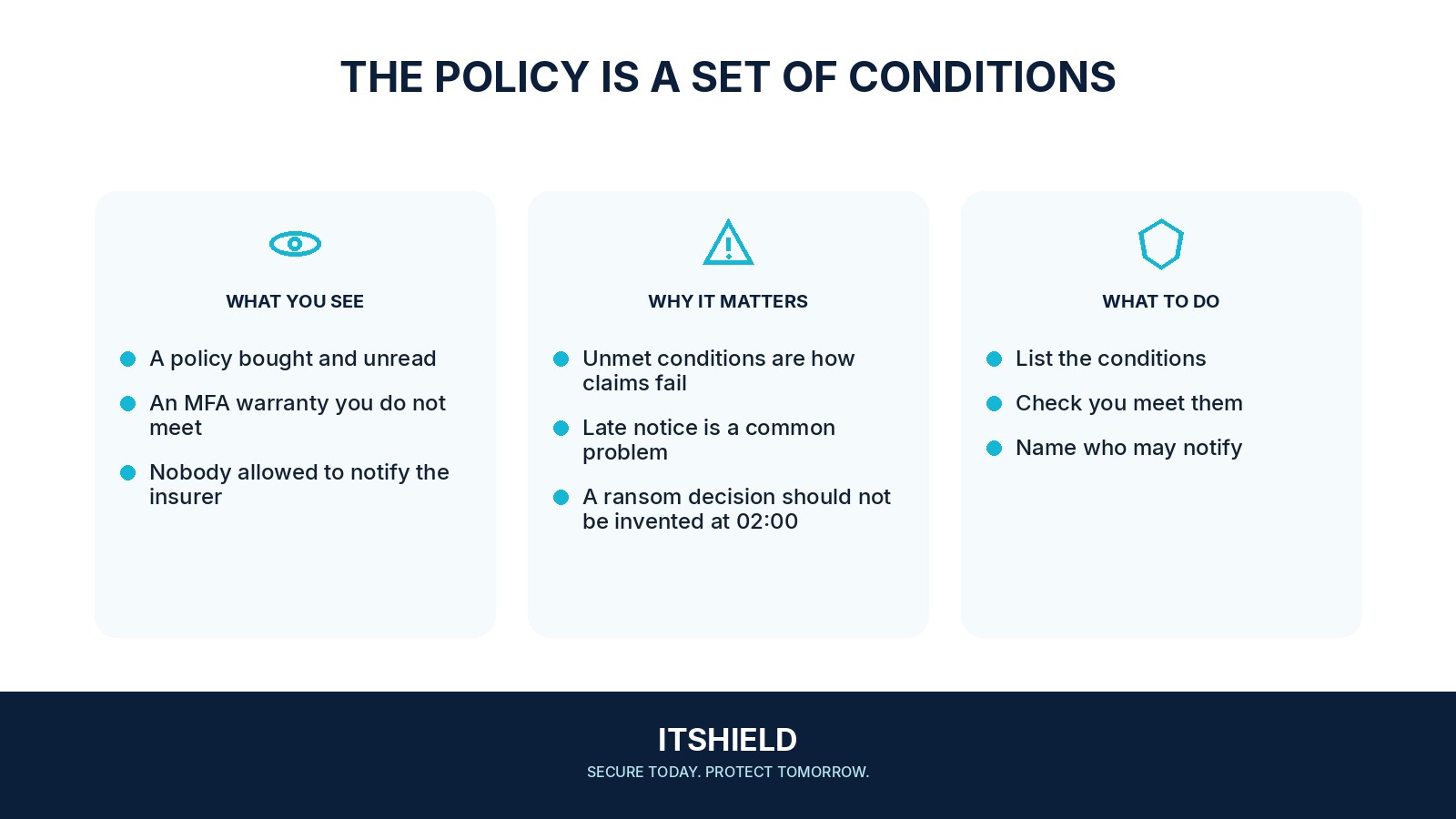
Ask about notification routes, response-provider requirements, waiting periods, exclusions, and the security statements made in the application. Check how business interruption, information exposure, and supplier incidents are treated. Interpretations depend on the actual policy and applicable law, so seek a qualified adviser for unclear commitments.
- Exposure
Describe the disruption and losses you need to consider.
- Policy
Ask the insurer or broker about relevant conditions.
- Evidence
Keep accurate records of the controls you represent.
A practical example
Imagine a small organization expecting its insurer to arrange incident help. During review, it learns that a particular contact route and approved provider must be used. It adds those details to the response plan and clarifies a confusing exclusion before signing.
What to do next
- Describe the incident help. Ask how to report a claim, who provides response support, and when the insurer must approve a provider or spending.
- Review the financial terms. Ask about the overall limit, separate limits for particular losses, deductibles, and waiting periods.
- Read exclusions and conditions. Clarify which events or systems are excluded and which security statements or controls the contract requires.
- Check the wording with an adviser. Use written answers and the actual policy. Confirm how applicable law and the contract affect the situations important to your organization.
How to check the result
Keep written answers with the policy and assign an owner for renewal. Make sure operational staff know the reporting steps; buying cover does not replace prevention, evidence, or a tested recovery plan.
Can we use any incident-response provider after an event?
Check the policy’s notification and approval requirements with your insurer or broker. Do not assume a provider or expense is covered without checking the actual terms.
Sources and useful guides
The following resources provide background and more detailed guidance. Use the sections that match your service and situation.