
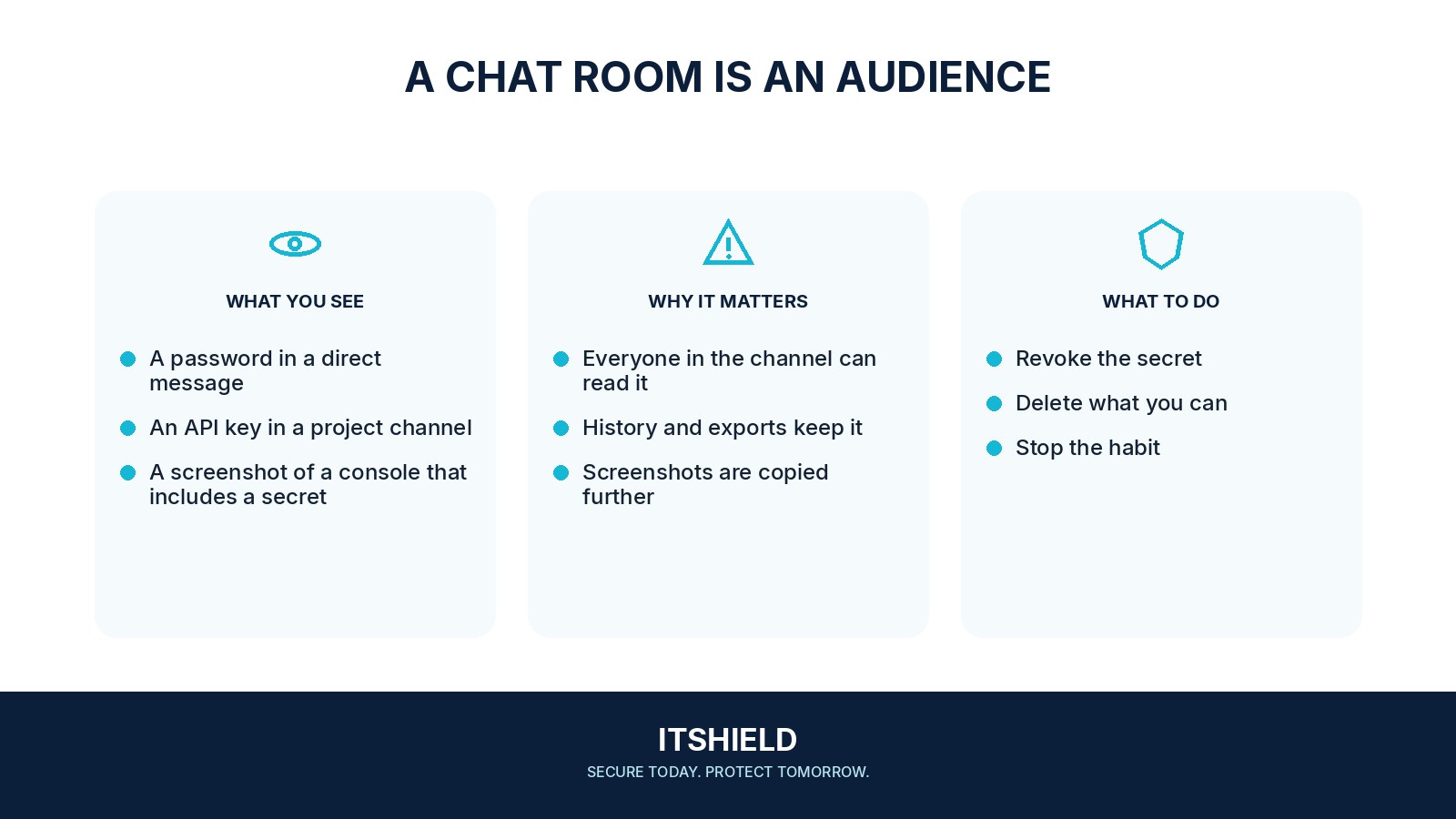
A password or access key pasted into chat should be treated as exposed to the people and systems able to see that conversation. Deleting the message can reduce visibility, but it does not invalidate the secret or erase every notification, export, or saved copy.
Understand the idea
Identify the account or service the secret controls, then replace or disable it through the service’s normal process. Update legitimate applications that depend on it and check for signs of unwanted use. Limit discussion of the incident so the secret is not copied into another ticket or message.
- Identify
Determine what access the secret grants.
- Revoke
Replace or disable it through the issuing service.
- Investigate
Review exposure and use, then reduce remaining copies.
A practical example
Imagine a deployment key pasted into a project channel. The team replaces the key, updates the deployment service, and tests the next release. It removes the message through the normal controls, but records that cleanup was separate from making the old key unusable.
What to do next
- Identify the owner and what authority the credential grants.
- Remove it or rotate it through the service's official process. Plan a controlled replacement for production integrations so the correction does not cause an avoidable outage.
- Update the legitimate consumers through an approved secret store or deployment route.
- Check that the replacement works and that the old value no longer authenticates.
- Remove the exposed message where appropriate and follow the platform's retention or administrator process for other accessible copies.
How to check the result
Confirm that the old secret no longer works and the intended service still does. Review the period of exposure and improve the sharing method that led to the mistake.
The message was visible for only a few seconds.
Treat the credential according to its exposure and authority, not just the duration. Copies and notifications may exist, so deleting the message is not the primary containment step.
Sources and useful guides
The following resources provide background and more detailed guidance. Use the sections that match your service and situation.