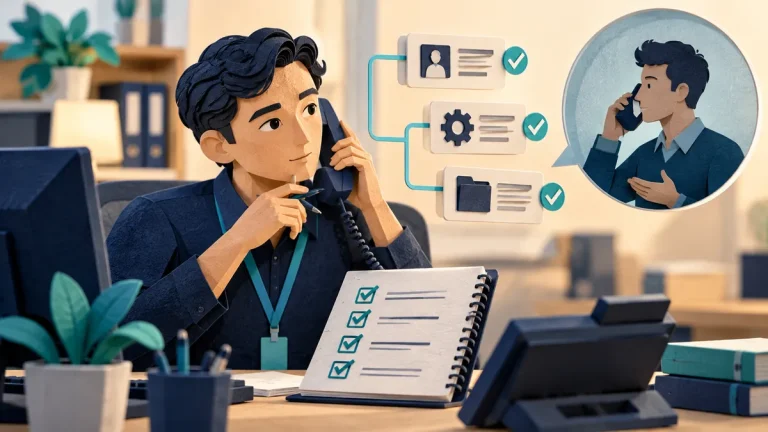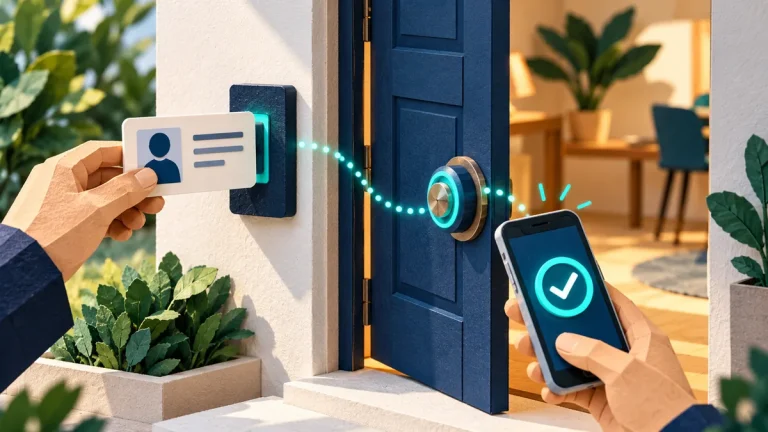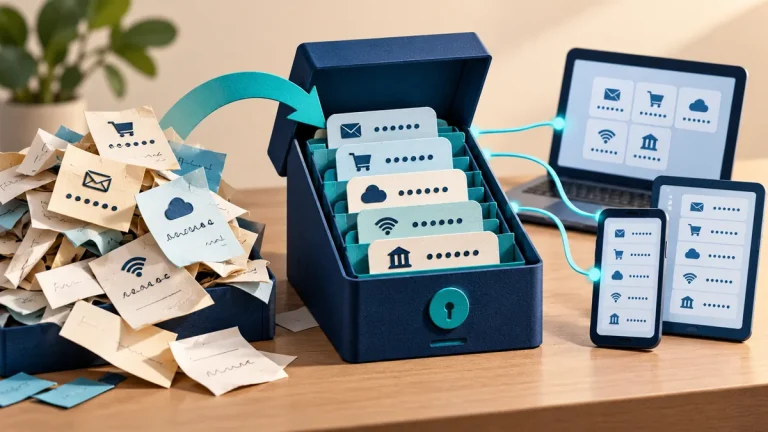
An account may have strong sign-in protection but a much weaker recovery route. If support or a recovery form can replace the extra sign-in method too easily, someone may avoid the protection through that process. Recovery needs to serve the real user without becoming an easier entrance for another person.
Understand the idea
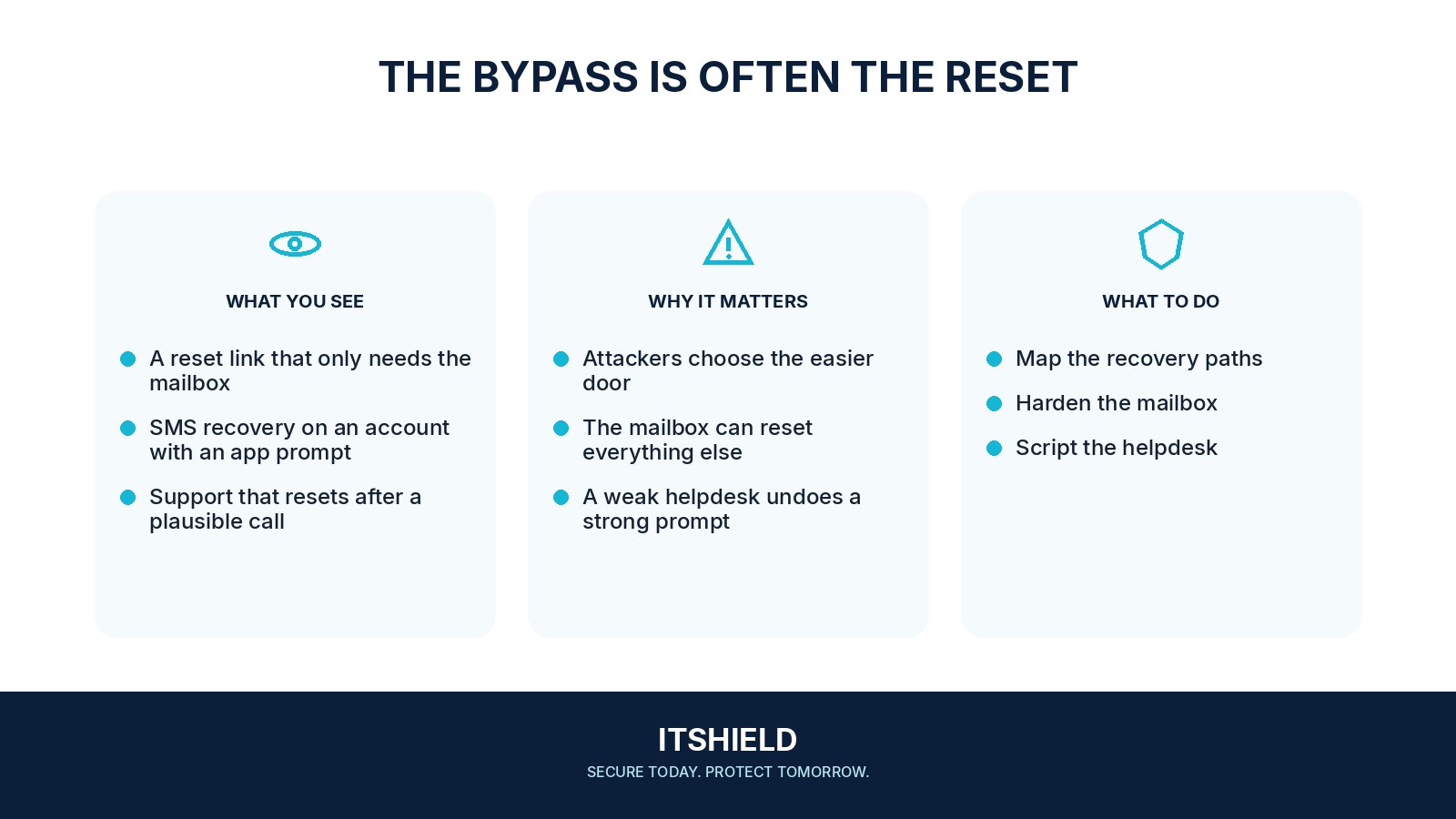
Map every way to regain access: backup codes, recovery email, phone number, support agent, and administrator reset. Decide what evidence each route needs and what happens when that evidence is missing. Personal details that are public or easy to obtain should not quietly replace stronger identity checks.
- Routes
List self-service and human-assisted recovery methods.
- Proof
Check how identity is established on each route.
- Recovery
Test legitimate recovery without creating an easy bypass.
A practical example
Imagine an account protected by a security key. A caller asks support to remove the key and offers a name and job title as proof. The agent follows the documented verification and escalation route instead of granting a weaker reset because the story sounds urgent.
What to do next
- Deliver recovery through established channels and avoid revealing unnecessary account-existence information.
- Use appropriately generated, bounded recovery tokens and a secure implementation following the platform's guidance.
- Protect recovery-method changes with checks proportionate to their impact.
- Rate-limit abuse while maintaining a usable route for genuine account owners.
- Notify the account owner through an existing trusted channel when important recovery details change.
- Define which sessions and grants are revoked after recovery and test that behavior.
How to check the result
Exercise recovery with approved test accounts. Confirm that legitimate users can recover and that a person missing the required evidence cannot obtain a more powerful exception.
Can support verify a person by calling the new number they supplied?
That only proves control of the new number. Use an approved independent verification method before changing the account’s recovery or MFA settings.
Sources and useful guides
The following resources provide background and more detailed guidance. Use the sections that match your service and situation.