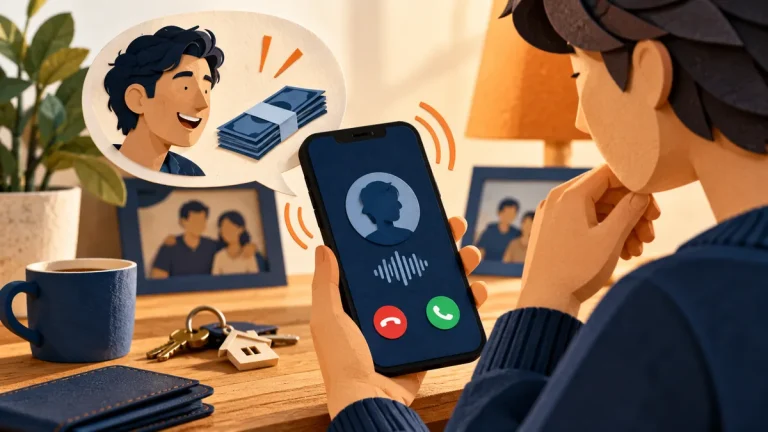
A message says a relative has lost their phone or needs urgent money. The story may sound personal because the sender knows a name, family detail, or recent event. That knowledge is not enough to establish identity. The safest next step is an independent conversation.
Understand the idea
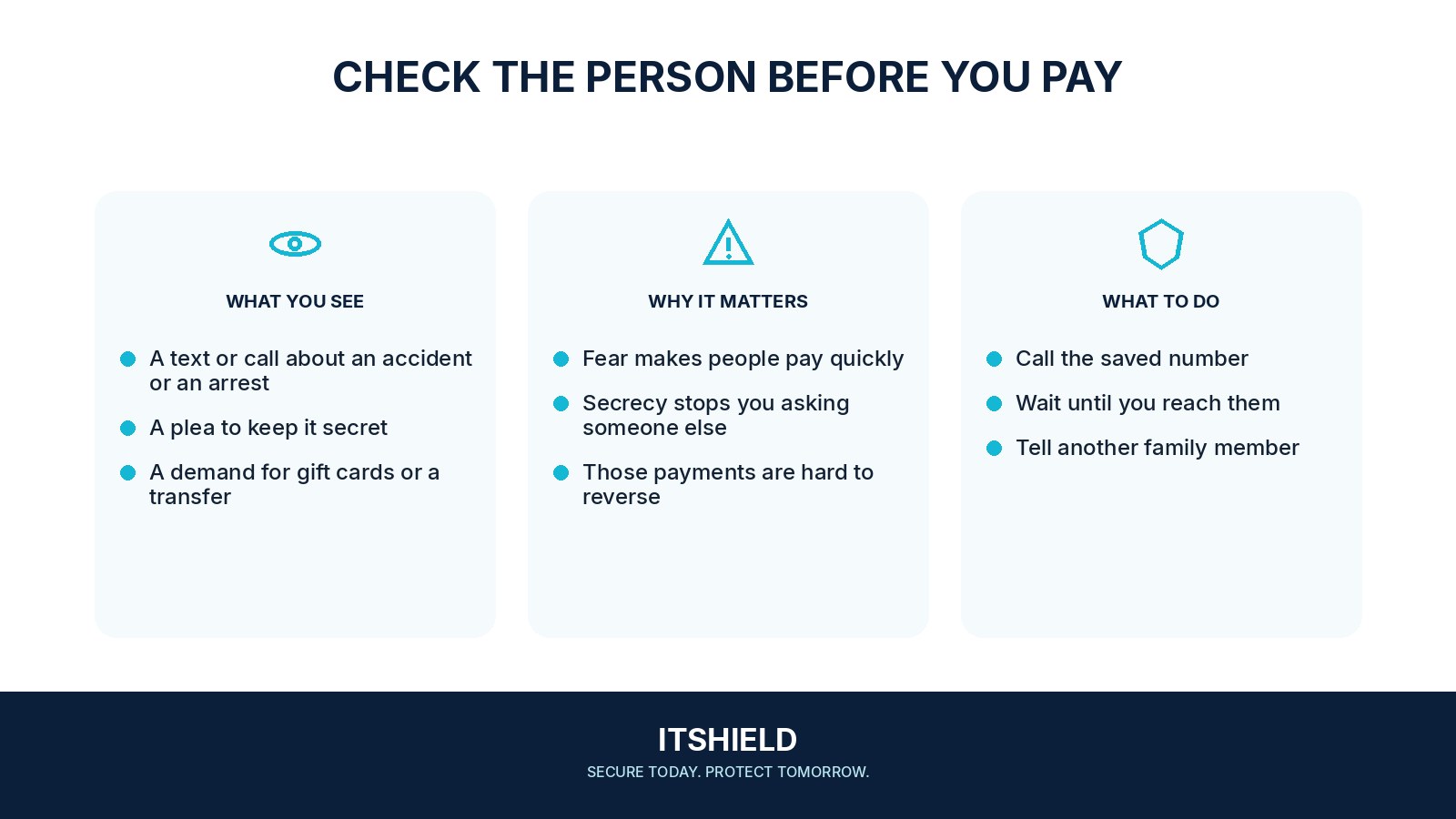
Pause the payment and contact the relative through a number or account you already had. If that does not work, ask another trusted family member. Avoid using a new number supplied in the request as your only check. Urgency and secrecy make verification more important, not less.
- Pressure
An urgent story asks you to act immediately.
- Contact
Reach the person or another trusted relative separately.
- Decision
Act only after checking the identity and the situation.
A practical example
Imagine a message saying, “This is my new number; please pay this bill now.” You call the relative’s usual number and learn they never sent it. If you cannot reach them, you keep the payment paused and try another trusted contact rather than following the message’s deadline.
What to do next
- Stop the conversation long enough to check. Do not promise a transfer or share a security code.
- Call the relative's established number, even if the message claims it no longer works.
- If they do not answer, contact another trusted family member through existing details. Lack of an immediate answer does not verify the sender.
- If someone claims to be a hospital, police officer, or other institution, contact that organization through an independently found official route.
- For an immediate threat to someone's physical safety, use the appropriate local emergency service. Do not rely on a stranger's payment instructions as a safety assessment.
How to check the result
Agree a family verification habit before an emergency. If money has already been sent, contact the payment provider promptly and keep the messages and transaction details.
The message says their phone number has changed.
Do not use that claim to verify itself. Try the previously known number or another trusted family contact, and check the story without following the new sender’s payment instructions.
Sources and useful guides
The following resources provide background and more detailed guidance. Use the sections that match your service and situation.