
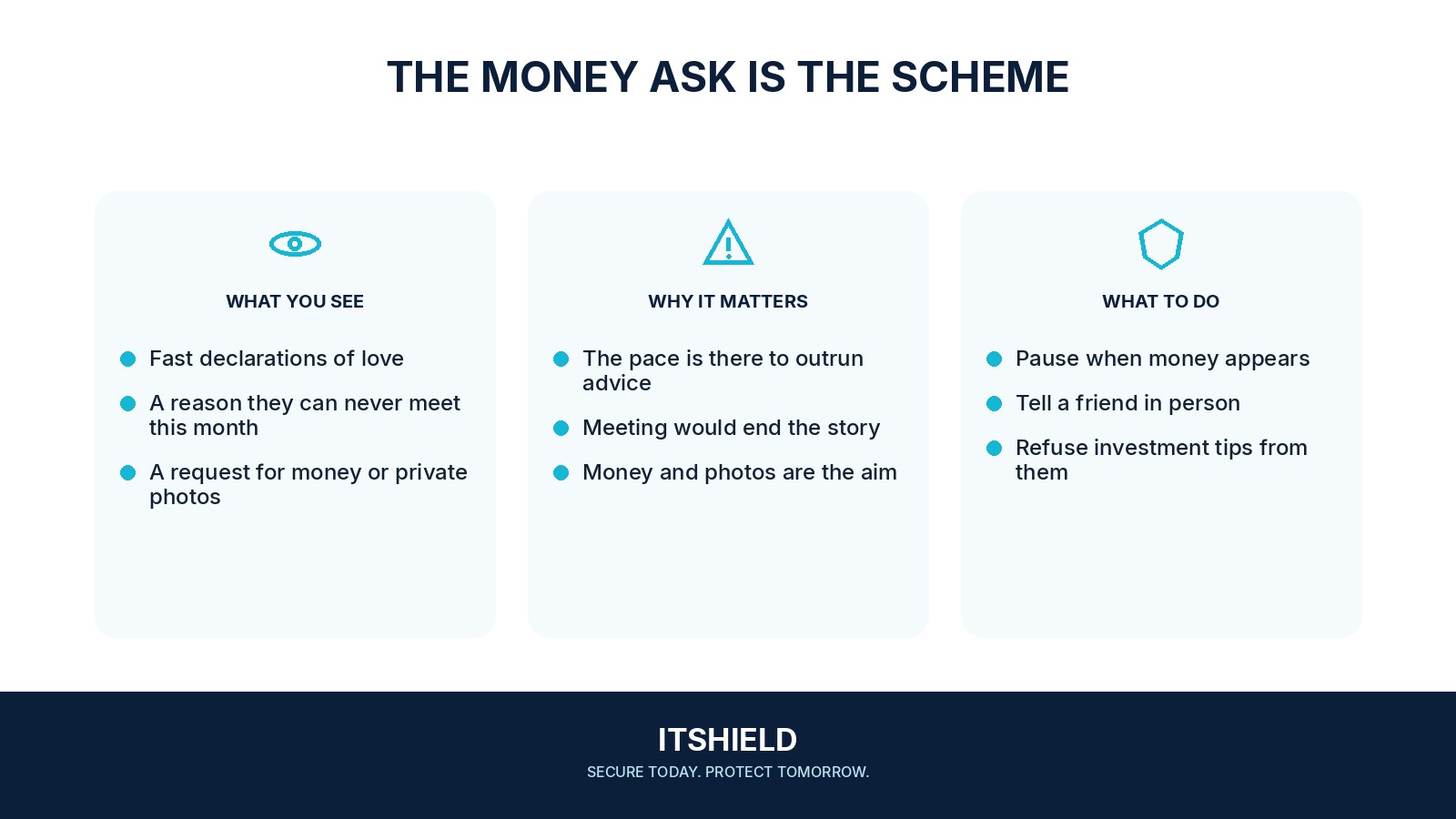
An online friendship or relationship can become a route to financial pressure. The person may describe a medical emergency, travel problem, investment opportunity, or temporary account restriction. A long conversation and genuine feelings do not make a request for money safe.
Understand the idea
Look at what you are being asked to do. Sending money, moving money for someone else, sharing identity documents, or opening an account can have consequences beyond the original story. Take time to speak with someone you trust who is outside the relationship and has no stake in the payment.
- Request
Notice the move from conversation to money or account access.
- Pause
Discuss the situation with someone you trust.
- Protect
Stop further transfers and report suspicious activity.
A practical example
For example, someone you have never met asks you to pay a travel agent so they can visit. They discourage you from discussing it with friends. You pause, verify the business independently, and decline to send money while the account of events cannot be confirmed.
What to do next
- Tell a trusted person the full request, including the payment method and any pressure for secrecy.
- Keep conversations and profile details while you assess the situation. Do not send identity documents to prove your own trustworthiness.
- Check photographs and the person's claimed identity independently. A reverse-image match can reveal a copied photograph, but no match does not prove authenticity.
- Refuse financial transfers and account access. A person who respects the relationship should not require a payment as proof of affection.
How to check the result
Keep conversation and payment records if you suspect a scam. If a transfer or document disclosure already happened, contact the relevant provider for practical recovery steps and report the account on the platform.
I have already sent money.
Contact the payment provider promptly and explain the suspected fraud. Preserve the conversation and be cautious of anyone promising recovery in exchange for another fee.
Sources and useful guides
The following resources provide background and more detailed guidance. Use the sections that match your service and situation.