
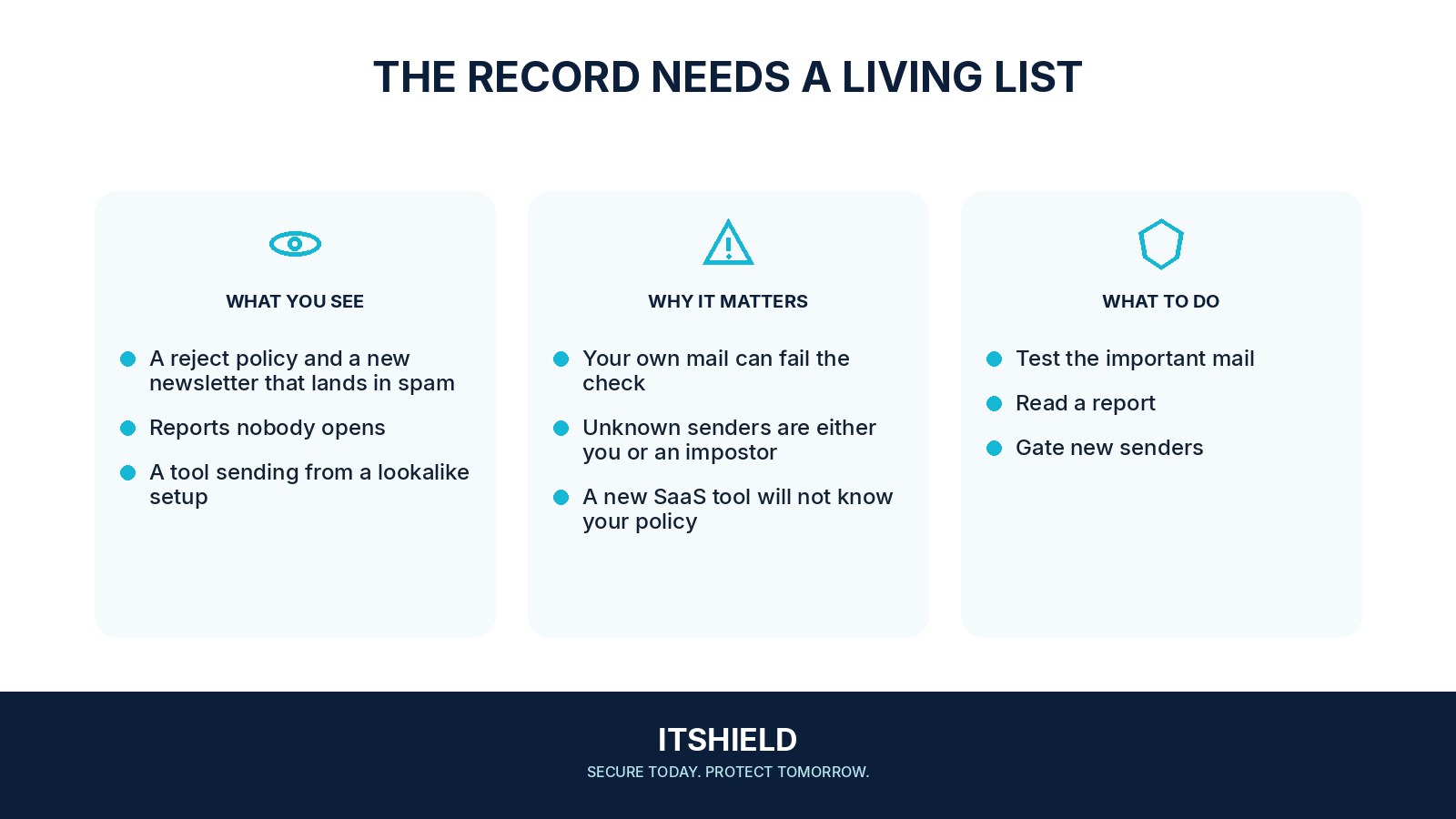
Publishing a DMARC policy is a milestone, not the end of email maintenance. New suppliers, website changes, and forgotten sending systems can affect authentication later. The team needs a small ongoing process for checking legitimate mail and investigating unfamiliar senders.
Understand the idea
Review reports alongside the list of services authorized to send for your domain. Distinguish genuine delivery problems from unrelated unauthorized mail. When adding a newsletter, billing tool, or website sender, verify its authentication and test real messages before relying on the new route.
- Senders
Include infrequent services such as monthly invoices.
- Reports
Investigate authentication and alignment patterns.
- Changes
Verify delivery after sender or policy updates.
A practical example
Imagine a new fundraising platform introduced after a successful DMARC rollout. Its messages fail alignment with the visible sender domain. The owner checks the provider’s supported configuration, tests delivery, and updates the sender inventory rather than weakening the policy without understanding the cause.
What to do next
- Check the published DMARC record through the authoritative DNS and confirm the reporting arrangement is usable.
- Send harmless test messages through each approved service and inspect relevant authentication results and delivery.
- Review aggregate reports for legitimate failures, unknown sources, and changes in alignment.
- Correct sender configuration and establish a change process before moving to a stricter handling policy.
- After any policy change, monitor delivery complaints and important business workflows as well as report counts.
How to check the result
Keep recent test messages, authentication results, and the sender list. A published DNS record alone cannot prove that every legitimate sender is correctly configured or that every delivered request is trustworthy.
An invoice service fails after enforcement. Should we weaken everything?
Investigate the legitimate sender’s authentication and alignment first. Make a bounded, documented change that preserves delivery without abandoning the intended protection.
Sources and useful guides
The following resources provide background and more detailed guidance. Use the sections that match your service and situation.