
Showing 1–12 of 14 articles
Page 1 of 2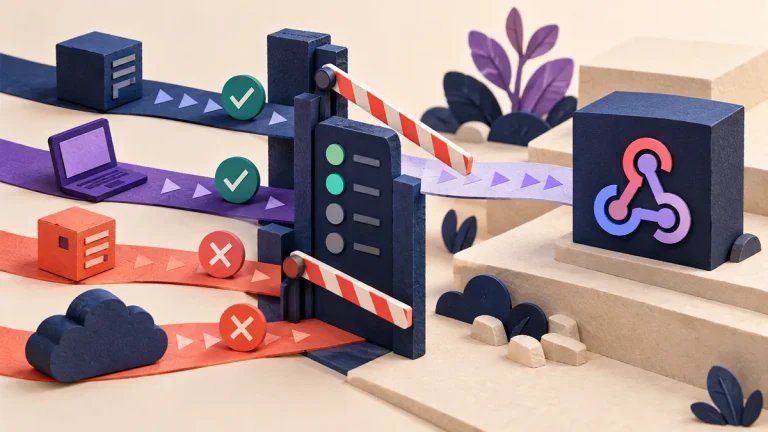
Check who is allowed to call your webhook
A webhook’s payload and familiar endpoint name do not prove who sent it. Validate the sender using its supported scheme, handle retries deliberately, and authorize the resulting business action.
Read the visual guide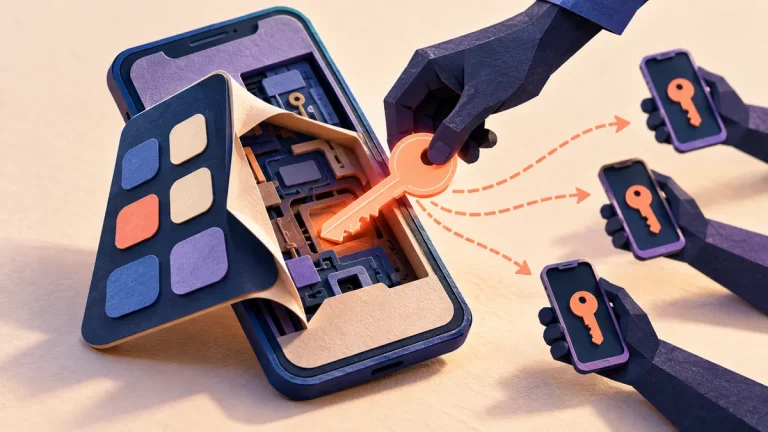
Do not put a secret API key inside a mobile app
An application you distribute to users cannot reliably hide a shared secret embedded in its code or resources. Put privileged authorization behind an appropriate server-side boundary.
Read the visual guide
Secure defaults people will leave switched on
A protective default is effective when people can complete real work without disabling it. Build a usable route for legitimate exceptions and test the resulting behavior.
Read the visual guide
When your system acts with the wrong person’s authority
A service may have more access than the person asking it to act. It must check the caller’s authority before using its own powerful identity on that person’s behalf.
Read the visual guide
How a small organisation should give volunteers access
Volunteers need access that fits their actual work, including a clear owner and a defined review point. Shared accounts and indefinite permissions make changes harder to control.
Read the visual guide
Account recovery that can walk around the second check
Strong sign-in protection can be undermined by a weaker recovery process. Review every way to regain access, including support-assisted changes and replacement recovery details.
Read the visual guide
An open-source licence is not a security review
Being able to inspect source code is valuable, but it does not prove that a component has been reviewed or is safe for your use. Assess the actual dependency and its operating context.
Read the visual guide
Why two people should approve a payment
A second approval helps only when it independently checks the important details. Tie the review to the actual beneficiary, amount, and transaction that will be released.
Read the visual guide
What encryption at rest and in transit each protect
Storage encryption and connection encryption protect different parts of a data journey. Neither replaces the decision about who can ask the service to reveal the information.
Read the visual guide
How long a shared file link should stay open
A sharing link should serve a specific task and audience. Named recipients, suitable permissions, and an expiry date can reduce access that continues after the work is done.
Read the visual guide
How to roll out a password manager to a small company
A team vault needs an ownership model as well as an app. Decide what is personal, what the organization owns, and how access will be removed when someone leaves.
Read the visual guide
How to remove access when someone leaves
A person’s access may extend beyond their main account. Use a planned sequence to protect information, close sessions and tokens, and transfer legitimate ownership without losing critical work.
Read the visual guide