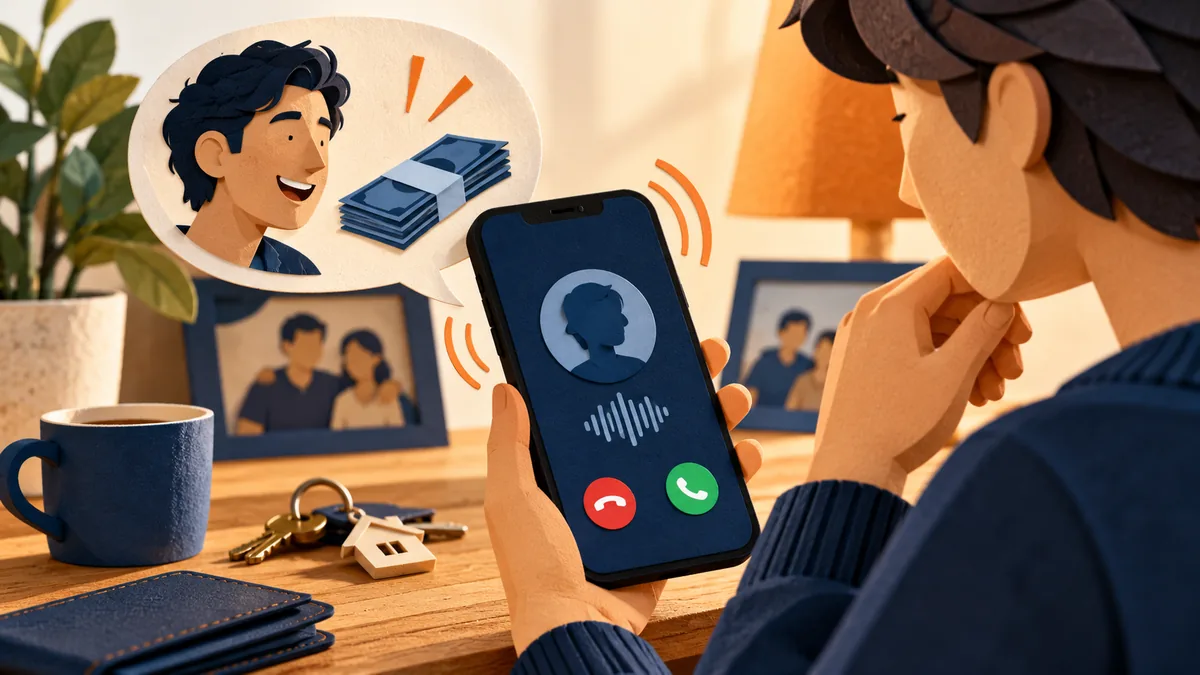
A familiar voice can make an urgent request feel convincing. Recorded or generated audio may imitate a person, while an ordinary scammer may rely on stress and a poor connection. You do not need to identify the technology involved before verifying the request.
Understand the idea
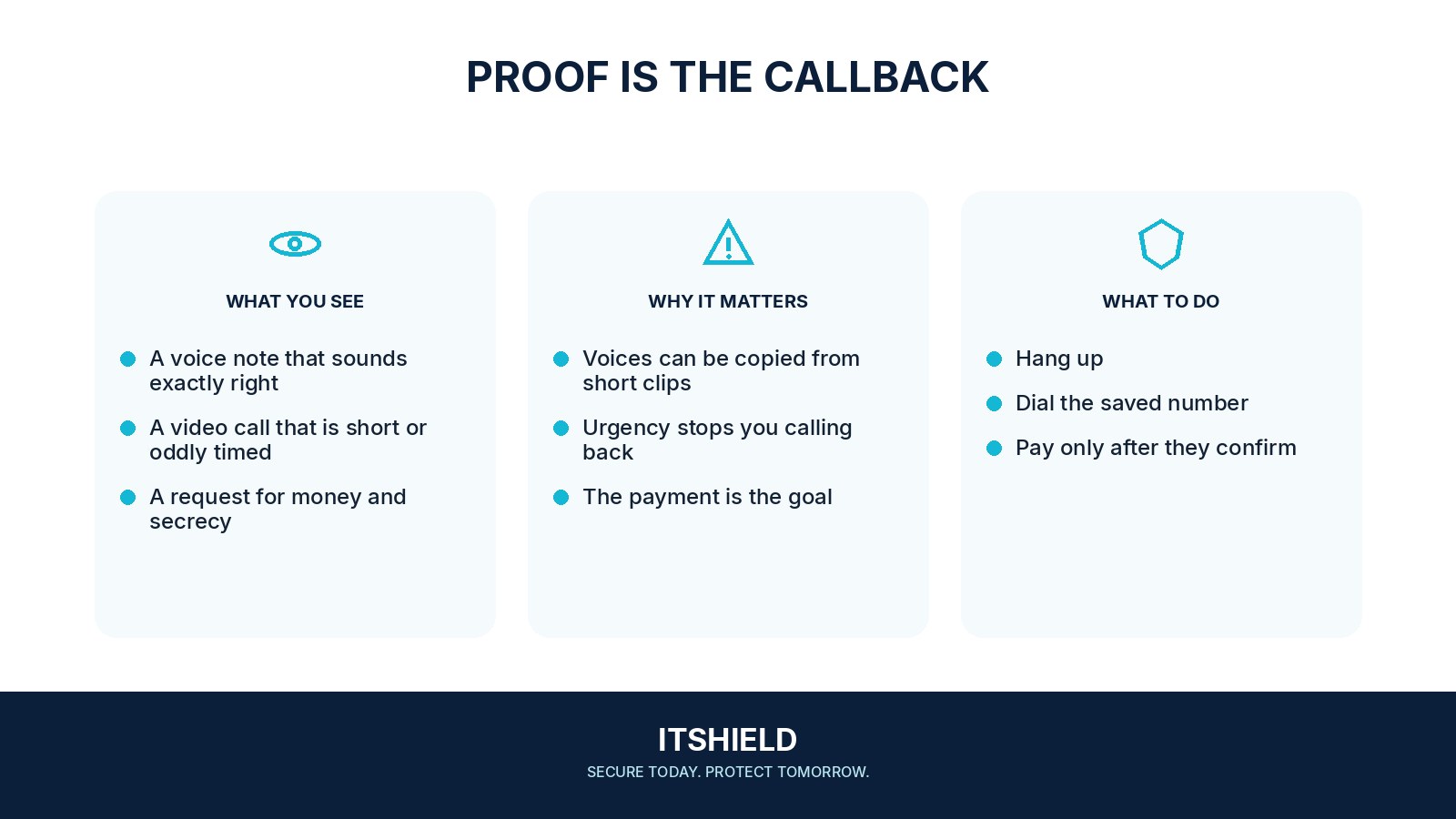
Pause the payment or disclosure and contact the person through a route you already know. Ask another trusted contact if necessary. Personal details and a recognizable voice can support a conversation, but they should not be the only approval for sending money or sharing an account code.
- Voice
The caller sounds familiar and creates urgency.
- Check
End the call and reach the person independently.
- Payment
Confirm the situation and destination before acting.
A practical example
Imagine a voice message that sounds like a relative asking for an immediate transfer. You call their usual number and find they are safe. If they cannot be reached, you continue checking through trusted family contacts and keep the transfer paused rather than following the message’s deadline.
What to do next
- Define who can approve payments or change recovery details and what evidence they must check.
- Keep established contact details separate from incoming instructions.
- Require a second person for significant or unusual financial changes.
- Agree that staff and family members may pause a request without being punished for “wasting time.”
How to check the result
Agree a verification habit with family or colleagues before an emergency. Keep the message and transaction information if you need to report an attempted or completed fraud.
The caller knows personal family details.
Those details may come from public posts or earlier contact. Use a previously known number or another trusted relative; do not let urgency replace independent verification.
Sources and useful guides
The following resources provide background and more detailed guidance. Use the sections that match your service and situation.