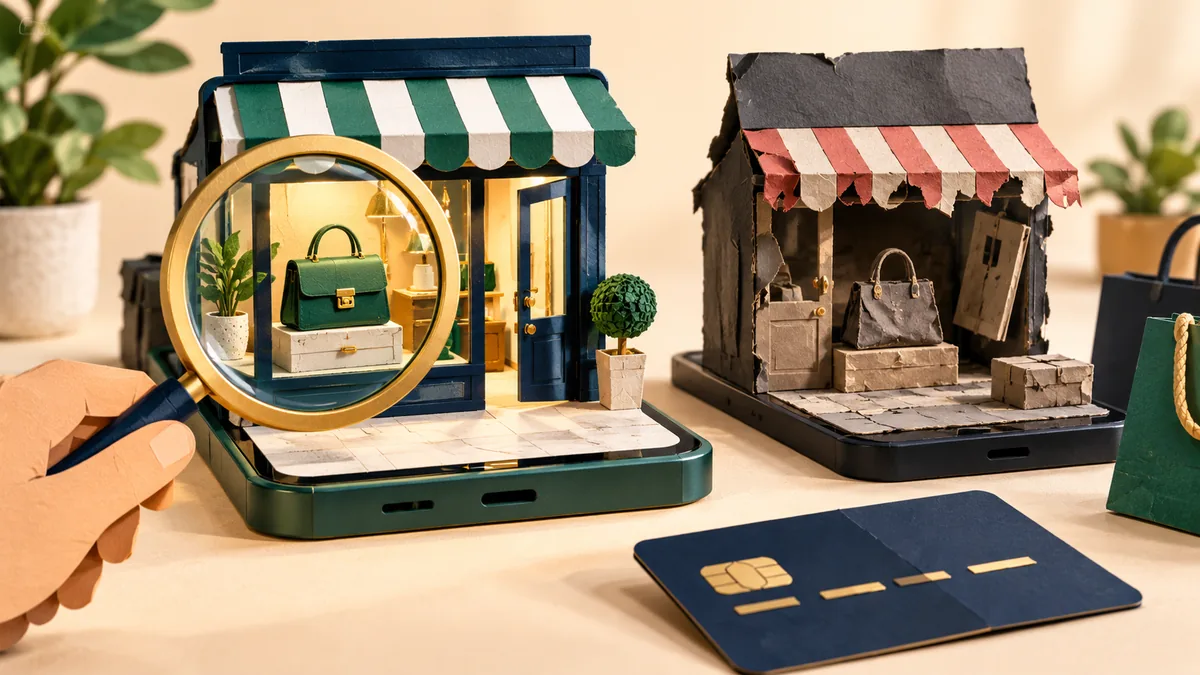
A fake shop can copy product photos, reviews, and a familiar brand’s design. A polished page therefore tells you little about whether the seller will deliver. Before paying, check the business behind the shop and whether the offer makes sense.
Understand the idea
Look for a clear business identity, realistic contact details, delivery and return information, and independent evidence of trading. Read the actual domain rather than the logo. A very low price, a rushed countdown, or a payment method with little practical recourse deserves closer checking.
- Seller
Check who operates the shop and how to reach them.
- Offer
Compare the price, terms, and independent evidence.
- Payment
Choose a method whose dispute options you understand.
A practical example
For example, an advertisement offers expensive equipment at a fraction of its usual price. The shop has no usable business contact and asks for a direct transfer. You verify the brand’s authorized sellers and choose a seller you can identify instead of relying on the advert’s comments.
What to do next
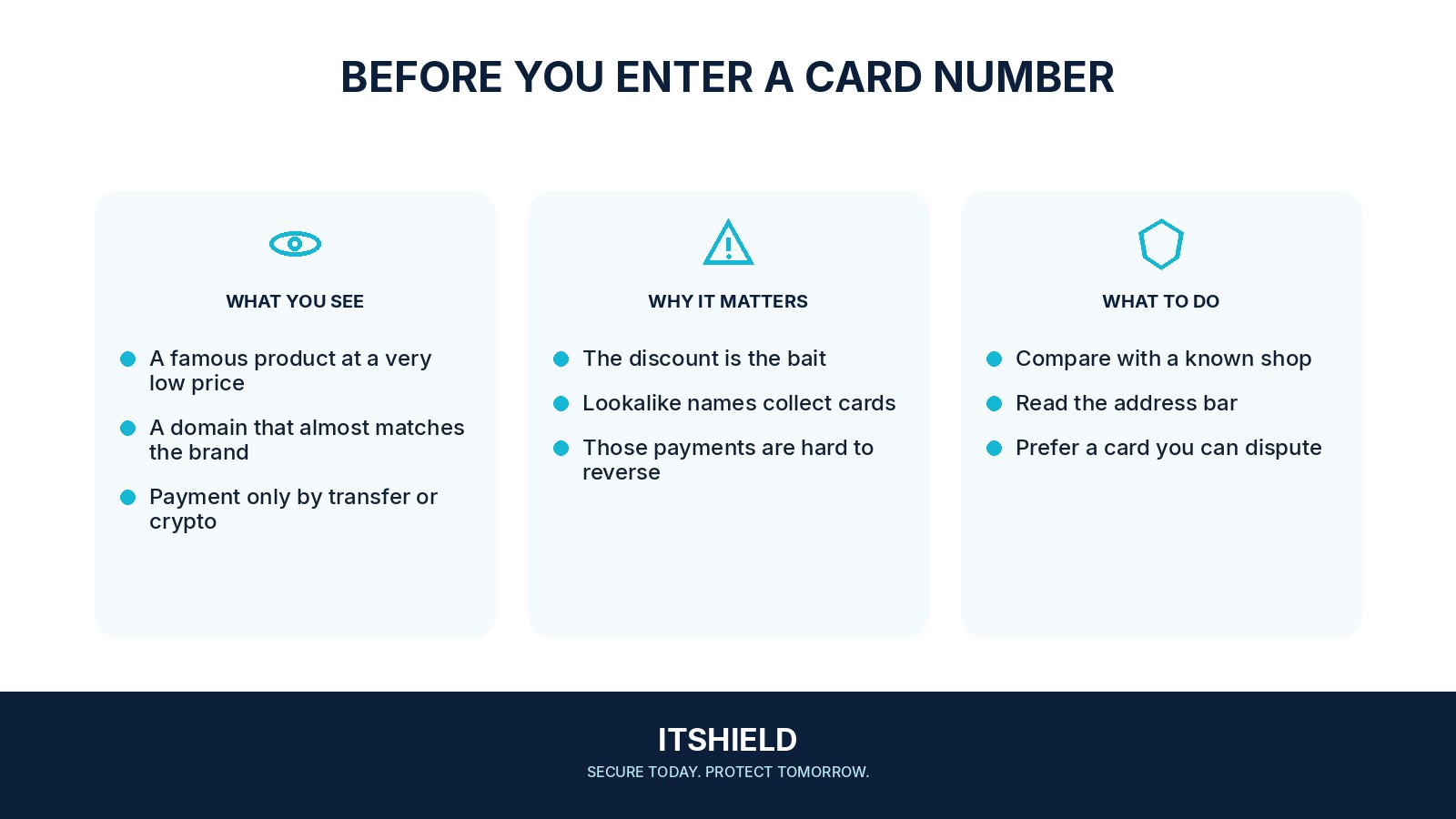
- Read the actual website address. Copycat shops often use a similar name or an address unrelated to the brand they display.
- Confirm the exact product, total price, delivery estimate, and return arrangements. Save the offer and terms with the date.
- Use a payment method with appropriate dispute protections where available. Understand the local terms rather than assuming every card or transfer has the same protection.
- Stop if the seller insists on gift cards, cryptocurrency, or an unusual transfer to an unrelated person. Pressure to leave a marketplace's protected payment process deserves particular caution.
How to check the result
Keep the order confirmation and seller details. If a purchase looks fraudulent, contact the payment provider promptly and explain what was bought, how payment was made, and what happened afterwards.
The seller only accepts a difficult-to-reverse transfer.
Treat that as a reason to pause. Verify the business independently and consider whether you can resolve a dispute if the goods never arrive.
Sources and useful guides
The following resources provide background and more detailed guidance. Use the sections that match your service and situation.