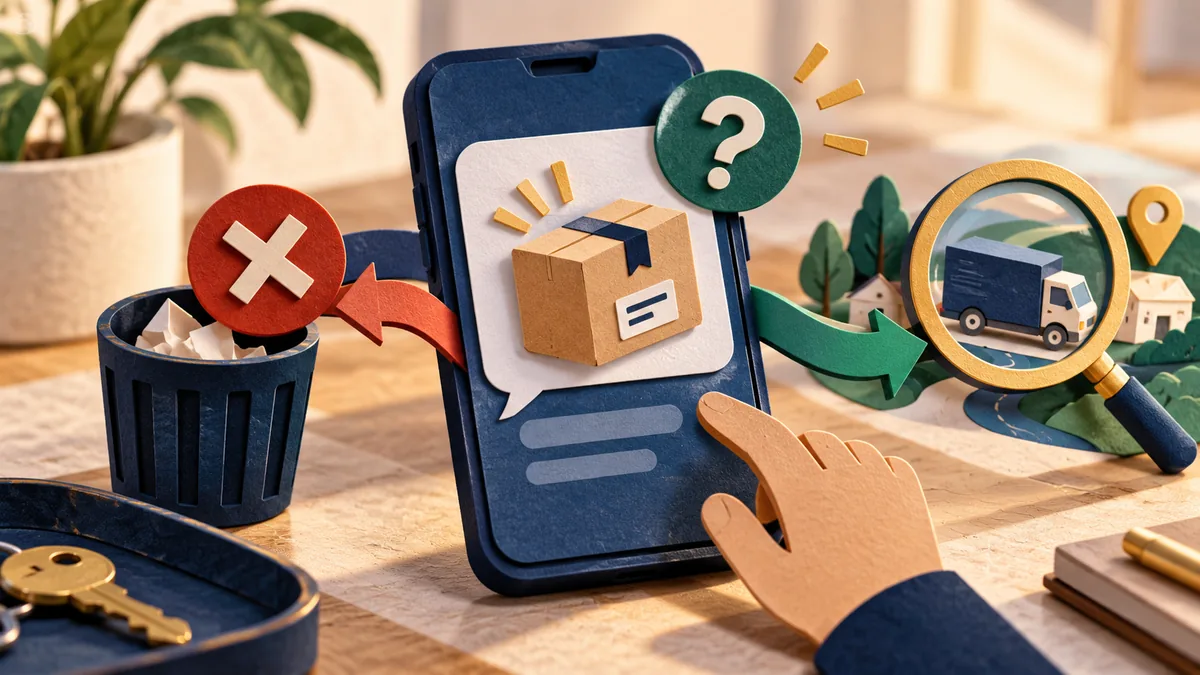
A delivery text often creates a small, believable problem: a missing address, a failed delivery, or a modest extra fee. That low-pressure appearance can hide an attempt to collect card or account details. Check the parcel through the retailer or courier’s real service before following the message.
Understand the idea
Open the shopping account or courier app yourself and look for a matching delivery. A tracking number helps only when it can be checked through a verified route. Avoid using the text’s link as both the source of the claim and the place where you verify it.
- Message
Leave its payment and sign-in links unused.
- Tracking
Open the known courier route and check your actual delivery.
- Response
Contact the provider if you already shared payment details.
A practical example
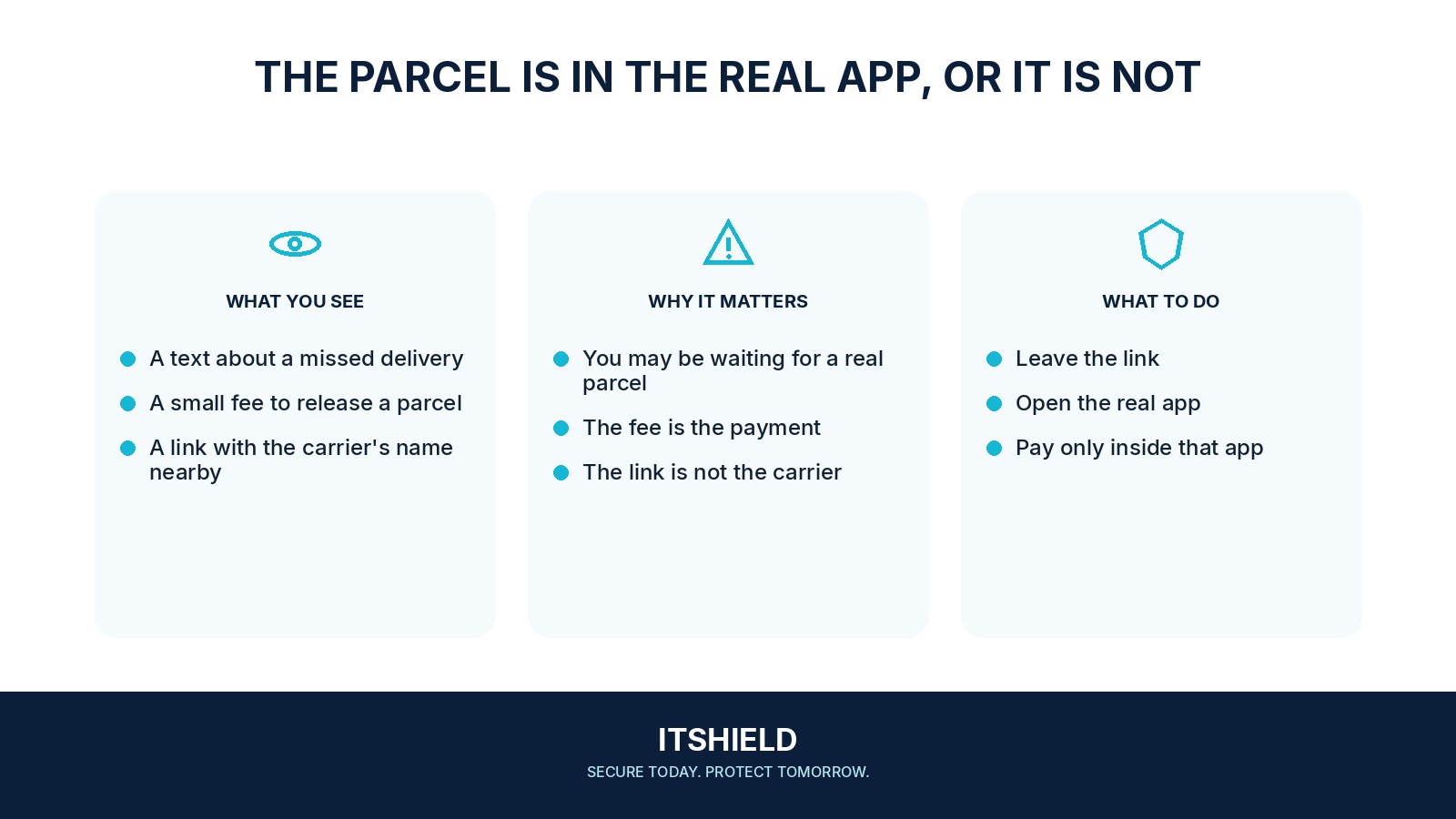
Imagine a text asking for a small redelivery payment. You recently ordered several items, so it seems plausible. You check the retailer’s order page and the actual courier’s tracking service. If neither confirms the charge, you leave the message’s payment page unused.
What to do next
- Open the retailer's order history or the courier's official app yourself.
- Compare the tracking number and delivery status with a real order. Do not type an unfamiliar tracking link from the message into a payment form.
- If a fee or address correction appears necessary, use the official service's established route and confirm exactly what is required.
- Decline unrelated requests for banking passwords, security codes, app installations, or identity documents.
How to check the result
If details were entered, tell the relevant bank or provider what was shared. Save the message, time, and destination for reporting without circulating the active link as an ordinary recommendation.
The message asks for only a small redelivery payment.
The amount does not establish legitimacy. Verify the parcel independently before entering card information, and contact your payment provider if you already used a suspicious page.
Sources and useful guides
The following resources provide background and more detailed guidance. Use the sections that match your service and situation.