
A small club may depend on one volunteer to organize payments. That convenience can become a weakness when an email appears to come from the chair, treasurer, or supplier. A simple payment rule is easier to follow than asking volunteers to identify every possible scam.
Understand the idea
Decide who requests, verifies, and approves a payment. Check changed beneficiary details through a separately known contact method. The second approval should cover the final destination and amount, not just the general idea of paying the supplier. Keep the process short enough for real volunteers to use.
- Request
Match the proposed payment to an agreed activity.
- Verify
Check unusual instructions or destination changes independently.
- Release
Have another authorized person review the final details.
A practical example
Imagine a club receiving an urgent venue invoice from a familiar-looking email address. The treasurer matches it to the event booking and calls the venue through the existing record. Another committee member checks the final account details before payment is released.
What to do next
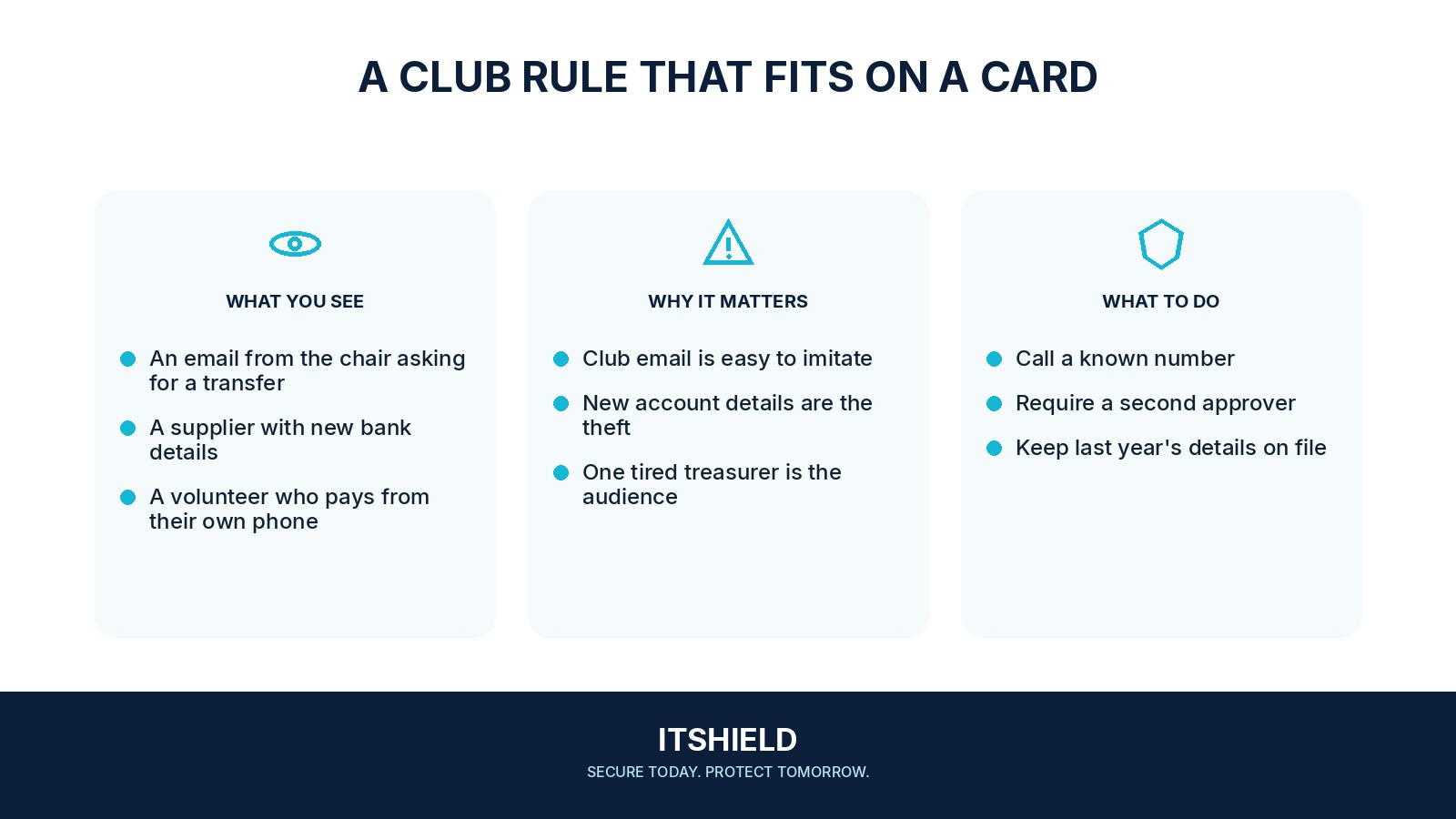
- No beneficiary change from email alone. Verify changed bank details through a previously recorded contact.
- Separate important approvals. A second authorized person checks the destination and evidence before the payment is released.
- Use individual accounts. Protect club email and banking access with unique passwords and access keys and supported strong authentication.
- Keep an absence route. Record who substitutes for an unavailable approver without eliminating the verification step.
How to check the result
Keep the invoice, independent confirmation, and approval together. If the people responsible cannot explain the same process, clarify it before the next urgent request arrives.
The request appears to come from the club chair.
Verify the payment through the normal independent route. An email account or display name is not enough to authorize an unusual transfer.
Sources and useful guides
The following resources provide background and more detailed guidance. Use the sections that match your service and situation.