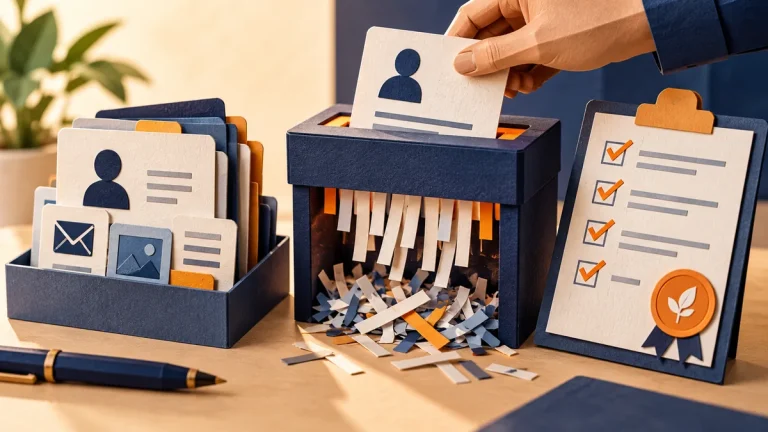
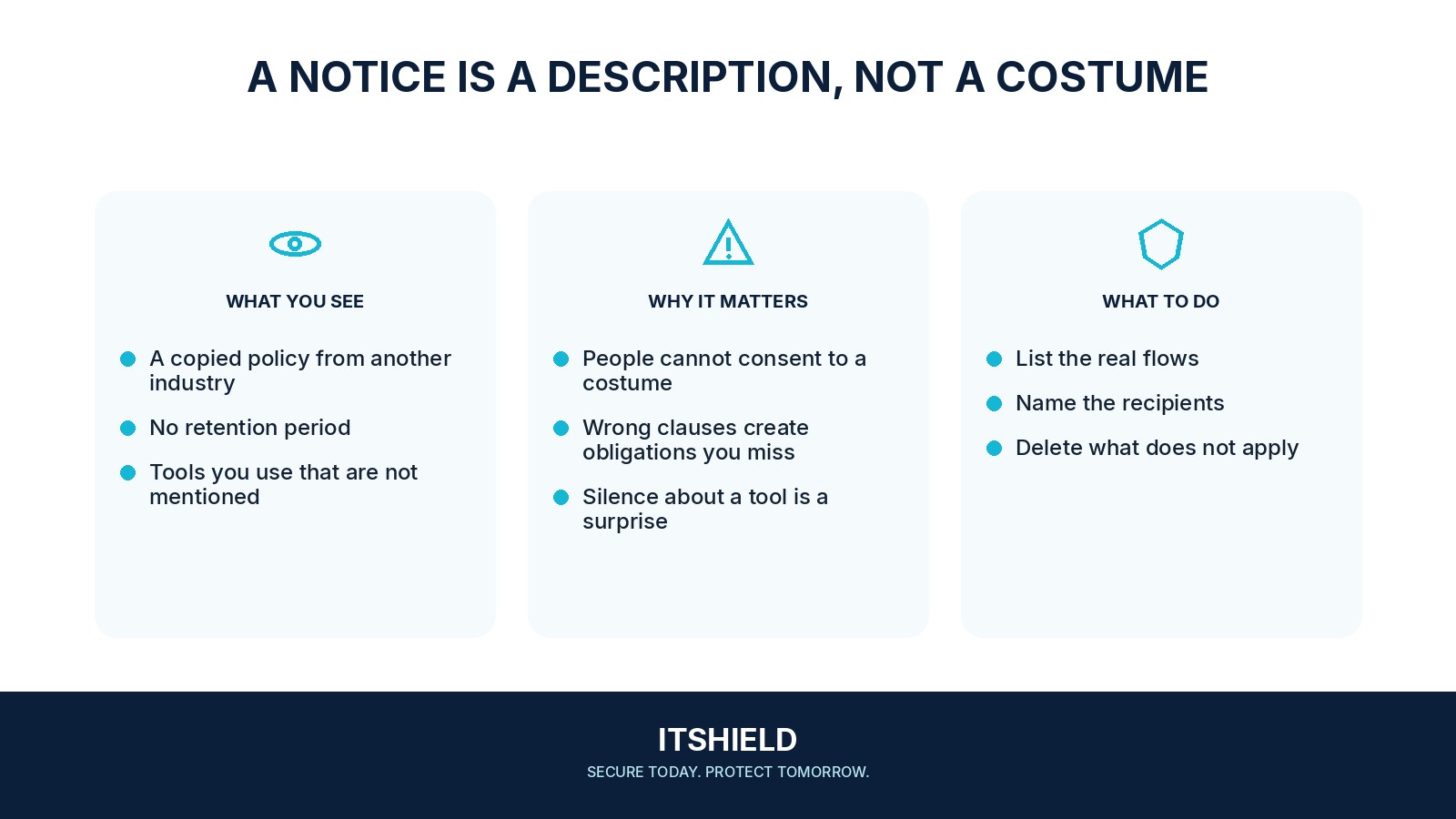
A privacy notice should help people understand what happens to their information. It needs to reflect the service you actually operate, including the forms, accounts, analytics, and suppliers involved. A polished notice copied from another organization can easily describe the wrong practices.
Understand the idea
Start with a simple information map: what is collected, why, who receives it, how long it is kept, and how someone can contact you. Explain these points in ordinary language. Required legal details depend on the applicable rules, so check them against the organization’s location, audience, and real processing.
- Facts
Map the forms, services, recipients, and actual purposes.
- Explanation
Use clear sections tied to the reader’s questions.
- Check
Compare the notice with the real service and applicable requirements.
A practical example
Imagine an NGO adding a volunteer form and an external mailing service. The notice is updated to explain the requested details, their purpose, the relevant provider, and the contact route for questions. The team also checks the form itself rather than treating the notice as a substitute for appropriate settings.
What to do next
- Map the information. List what the service collects, why, and where it is stored or sent. Include forms, analytics, accounts, and relevant suppliers.
- Answer the reader’s questions. Explain who operates the service, what happens to the information, how long it is kept, and how someone can contact you.
- Check required legal details. Ask the appropriate privacy or legal owner to check the applicable requirements, rights, transfers, and oversight information.
- Compare words with practice. Test the live website and processes against the notice, then update it when the service changes.
How to check the result
Compare the notice with the live website and supplier list. Have the responsible privacy or legal reviewer check required content, and repeat the review when collection or sharing changes.
Can we say information is kept only as long as necessary?
Explain the relevant periods or meaningful criteria and check them against actual systems. A vague phrase alone does not help someone understand what happens to their information.
Sources and useful guides
The following resources provide background and more detailed guidance. Use the sections that match your service and situation.