
An ordinary public post can reveal more than the photograph shows. A badge, school name, travel date, or familiar background may help someone connect your identity to a place or routine. You do not have to stop sharing; it helps to choose the audience and timing deliberately.
Understand the idea
Look at the whole post, including the caption, image background, location details, and people tagged. Consider what a stranger could combine with earlier posts. Settings may limit some visibility, but screenshots and resharing can take information beyond the audience you first chose.
- Detail
Notice names, badges, locations, and visible documents.
- Audience
Check who can see and forward the post.
- Timing
Consider posting later or removing identifying details.
A practical example
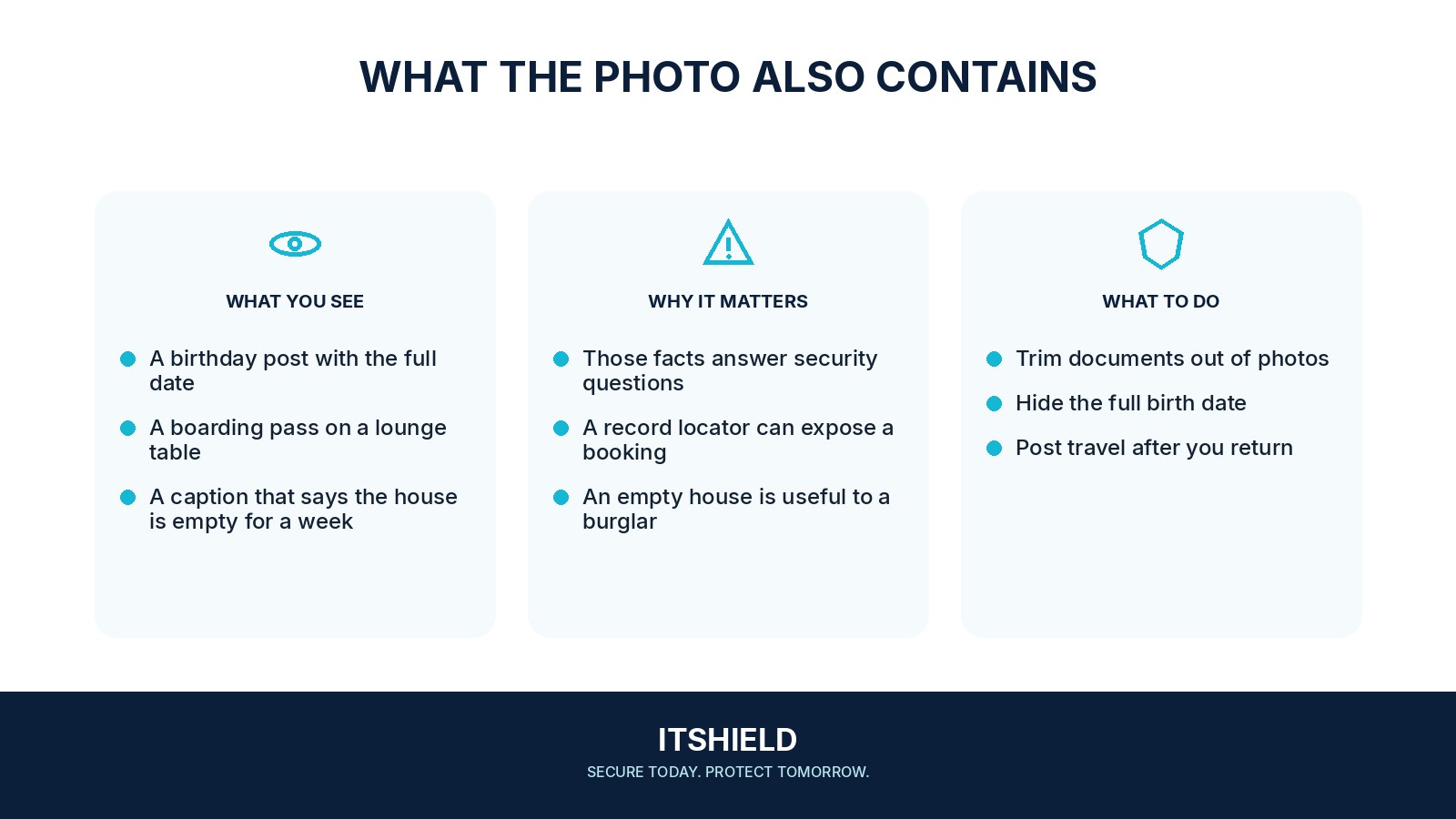
For example, a volunteer posts a picture from an office with a visitor list visible on the desk. Before publishing, they crop or replace the image and check whether the people shown agreed to the audience. A delayed travel post also avoids announcing an empty home in real time.
What to do next
- Audience: Is the post public, limited to named people, or shared through a link anyone can forward?
- Location: Does the caption, tag, live update, or background reveal a place you wanted to keep private?
- Other people: Have you considered the privacy of children, colleagues, or friends shown in the image?
- Documents and screens: Are addresses, tickets, barcodes, customer details, or work dashboards visible?
- Timing: Would posting after leaving the location avoid an unnecessary real-time disclosure?
How to check the result
Review a few recent posts from a public or signed-out view. Check whether the information visible matches the audience you intended, and remove unnecessary details where the service allows it.
Only friends can see the post. Can it still spread?
Yes. Viewers may save, forward, or describe it. Treat the selected audience as an access setting, not a guarantee that the content stays within that group.
Sources and useful guides
The following resources provide background and more detailed guidance. Use the sections that match your service and situation.